
If you’ve been reading this running blog for any period of time you may well have noticed that I’m quite an injury-prone runner. Since starting this blog in 2013, I’ve lost count of the number of races I’ve not started due to injuries. Although the cause of my metatarsal stress fracture remains a mystery, I suspect that the majority of these injuries have been caused by my own stubbornness and stupidity.
At the start of 2020 I was injured and had been told to avoid running and to rest by a local sports physiotherapist. Faced with the prospect of months of expensive sports physiotherapy sessions and no running, I decided that something needed to change, I needed to try something different.

When I saw that Run3D would be holding a popup clinic at the National Running Show in Birmingham, I did some research, read some reviews, and decided to book myself a slot on the Sunday. Booking a slot in advance meant that I was guaranteed a time for my gait analysis and treatment. Paying in advance meant that I was more likely to actually attend the National Running Show and wouldn’t talk myself out of travelling to the NEC.
Apologies, I’ve started to waffle on again. Before I launch into a review of the Run3D gait analysis and treatment session, here’s a quick introduction to the Run3D process.
A quick introduction to Run3D gait analysis
According to the Run3D site, the 3D gait analysis is described as a harmless and non-invasive procedure, which uses infrared cameras to track the exact 3D positions of small reflective markers that are attached to a person as they move.
A customised computational model of the person is generated from the marker positions and used to calculate their joint angles in the sagittal, frontal and transverse planes. Abnormal movement patterns are identified by time-normalising the data and then comparing the person’s joint angles to a normative database.
If like I was back in January, a runner is injured, the Run3D system uses the information to provide evidence-based rehabilitation. If a runner is looking to run faster and longer, Run3D’s data-driven approach is described as taking away any subjectivity from their advice.

The 1-hour appointment
The confirmation email I received when I booked my appointment told me the hour would include:
I’ll now do my best to remember as much as I can about what happened during each of the main stages of my appointment. January already seems like a lifetime ago. Spoiler, time constraints, and the fact I needed to get back home for a family party meant that I didn’t make use of the reserved places.
I do remember feeling incredibly nervous before my appointment because I hadn’t run for such a long time. I also felt slightly out of place as all of the other runners I met while I was waiting for my analysis to begin looked like they were super fit. I’m not sure why I felt so nervous, I ended up enjoying every minute of my 3D gait analysis and treatment.
3D gait analysis
My memory is terrible but I’m 95% certain I had to complete a questionnaire when I booked my Run3D appointment. I also had to answer some questions when I arrived at the Run3D stand.
The trainers I’d been running in at the time of my injury and the lower half of my body were fitted with reflective markers that would be detected by the motion sensor infrared cameras as I moved. This part of the process was quite entertaining as a couple of the reflective markers refused to remain attached to my leg. These reflective markers ensured that everything would be picked up by the infrared cameras. My wonky right knee had nowhere to hide.
Once all the reflective markers had been attached, I was led to a treadmill. At this stage, I started to feel quite nervous as I hadn’t been near a treadmill since I was a student and hadn’t run for several months. Add an audience of runners who watching the Run3D process into the mix and I was quite scared. The Run3D team were lovely and did their best to put me at ease. They even agreed to take some ‘action’ photos of me during the gait analysis, the videos were an added bonus!

The gait analysis started with me walking on the treadmill before I increased my pace to what should have been a steady run pace. The cameras then recorded me for what felt like a long time. I can’t remember how long I had to walk and then run for but I don’t think it was long, definitely no more than a minute or so. As I was that irritating runner with two pairs of trainers, I repeated this stage wearing the Hoka trainers I’d purchased on the recommendation of my sports physio. The Hokas felt completely unnatural and quite frankly made me feel like I was running in a pair of boats. I managed to upload one of the videos taken during my gait analysis onto YouTube.
Once my 3D gait analysis was complete, a member of the Run3D team removed all the reflective markers from my lower legs and directed me to a different area of the popup clinic.
I’d made it through the gait analysis without making an idiot out of myself.
Report review with a Run3D expert
The next stage of the assessment involved Andrea, a clinical lead, going through the initial findings and results of the Run3D reports that were produced following my 3D gait analysis. I ended up with two reports; one for my Brooks trainers and one for the Hoka trainers that I’d bought to replace my Brooks trainers. As a numbers person, I found this stage interesting.
In each report, my individual results were compared to Run3D’s database of uninjured controls to highlight injury risk-factors and biomechanical parameters that are detrimental to my performance. The report summarised some of the most important parameters at the beginning and Andrea used the more detailed information to gain a thorough insight into my musculoskeletal function.
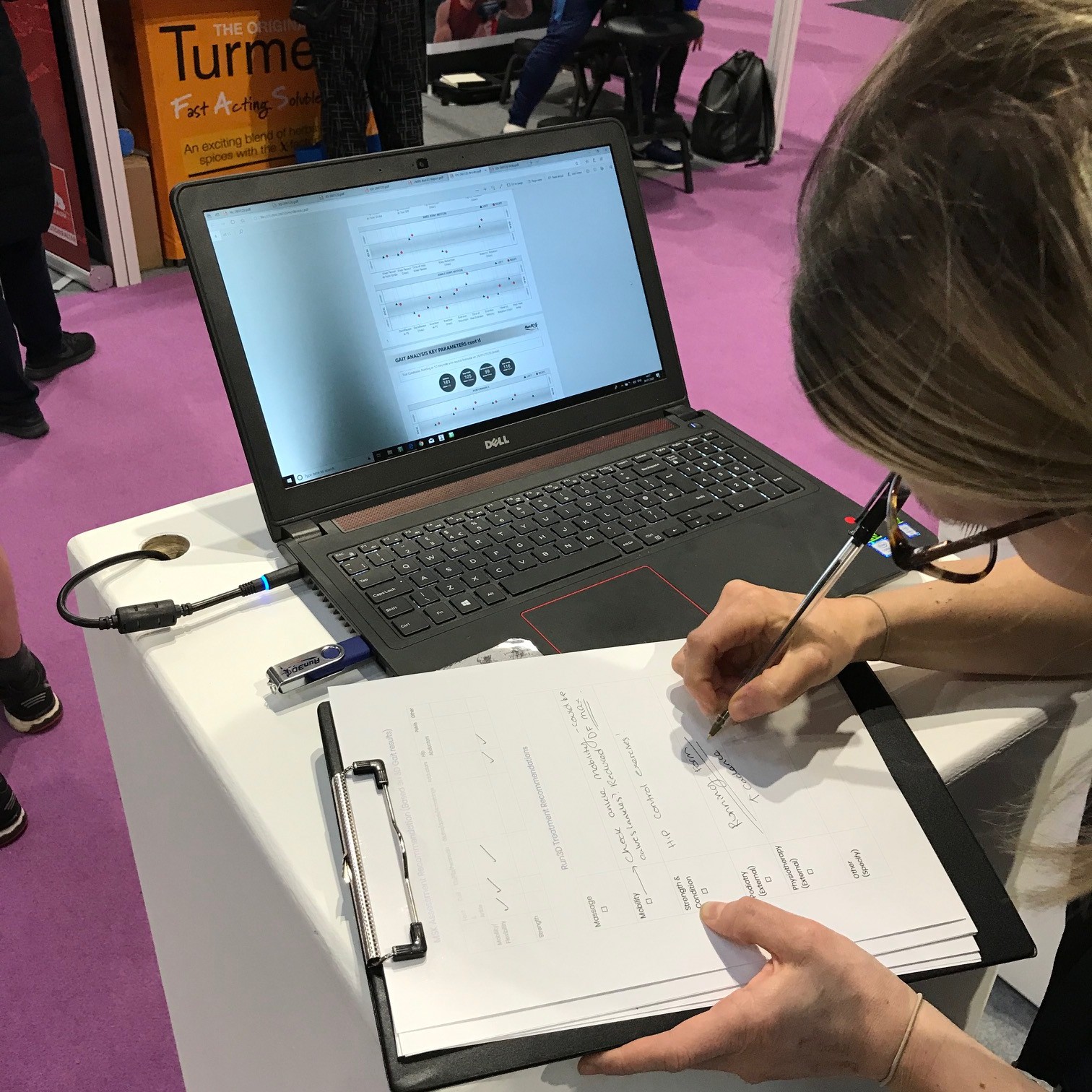
These results were subsequently used to provide me with evidence-based injury advice and specific performance recommendations.
As Andrea worked her way through my Run3D reports, she identified and highlighted a few key observations; one was for my ankle mobility to be checked during my 15-minute treatment session. Another was a recommendation for me to complete hip control exercises. Apparently, my results were relatively easy to interpret, a simple case of cause and effect. It quickly became clear that the Hoka trainers I’d been told to buy were not suitable for me and that my Brooks were fine.
This will probably sound strange, but I was relieved that the results of my 3D gait analysis actually identified issues with my gait and with my biomechanical parameters! If the 3D gait analysis had suggested I had a perfect running gait, I would have struggled to know what to do next.
Copies of these initial reports were provided on a USB stick. Run3D also wrote-up a summary report and recommendations after the event, these reports along with an interpretation summary and my evidence-based rehabilitation report were emailed to me a week after the National Running Show. I’ll provide more information about these reports later.
Evidence-based advice
Andrea interpreted the results of my Run3D assessment and used this information to produce me an initial evidence-based rehabilitation programme. More detailed information about this programme was provided in a report a week later.
Recommendations included foam rolling exercises, crab walk in squatting exercises, and stretches targeting my numerous what I’d call ‘problem’ areas. I was given the opportunity to run through each of these exercises and stretches during the final stage of the Run3D gait analysis process, the 15 minute treatment session.
15 minute treatment session
The final part of the Run3D gait analysis process was a 15 minute treatment session with Andrea. I’m not sure if this is normal, but my treatment session lasted quite a bit longer than 15 minutes.
The treatment session started with some strength and flexibility tests. These tests confirmed that I’m quite possibly the least flexible runner on the planet and highlighted an issue with my right foot. The sports physiotherapist I saw a few years ago identified a similar issue. Andrea advised me that not running for several months had contributed to my lack of strength and flexibility, I’d almost seized up. I was also told I could start running again if I was sensible, didn’t overdo it, and followed a Couch to 5k type programme.
I found the next stage of the treatment session – getting to grips with the dreaded foam roller – a little stressful. Having to use a foam roller and demonstrate my poor foam rolling technique in front of what felt like quite a large crowd of people waiting for a class was a touch embarrassing.
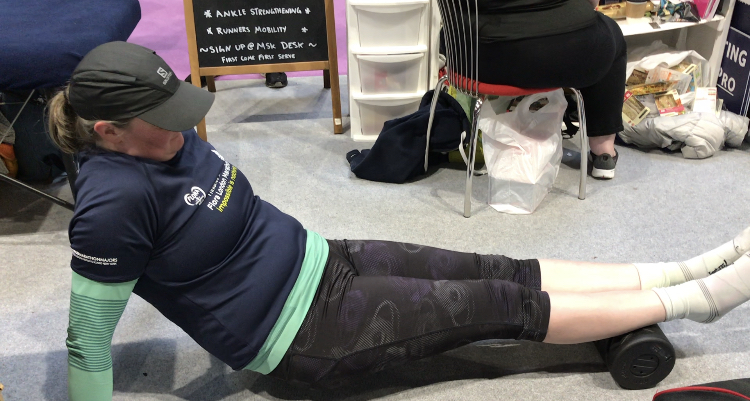
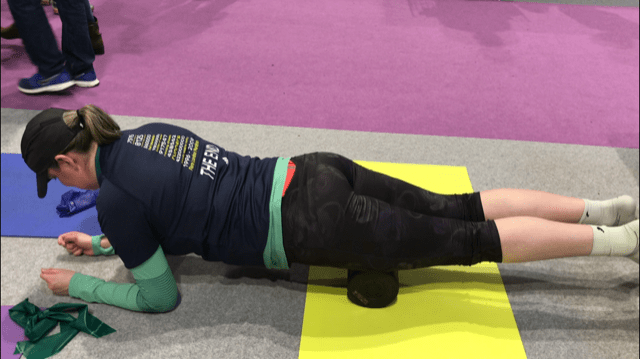
Struggling to hold up my own bodyweight made me realise how weak my arms were and how little core strength I had. Luckily, Andrea very kindly took the time to film me using the foam roller. This was ideal for me as I have a terrible memory.
The final stage of the treatment session comprised of Andrea demonstrating and filming me attempting to get to grips with a second exercise; crab walk in squatting. This exercise very clearly demonstrated my complete lack of coordination. I was so uncoordinated it was almost comical; it took me a couple of attempts to get this exercise right. Fortunately, Andrea was incredibly patient with me and explained everything more than once.
Reports provided a week after
A week after the National Running Show I received three detailed reports from Run3D via email. As this review is now getting a lot longer than I’d planned, I’ve hopefully attached copies of the three reports.

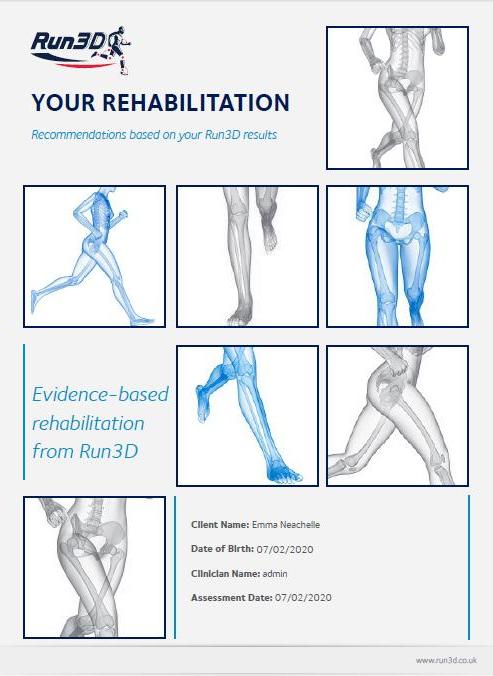
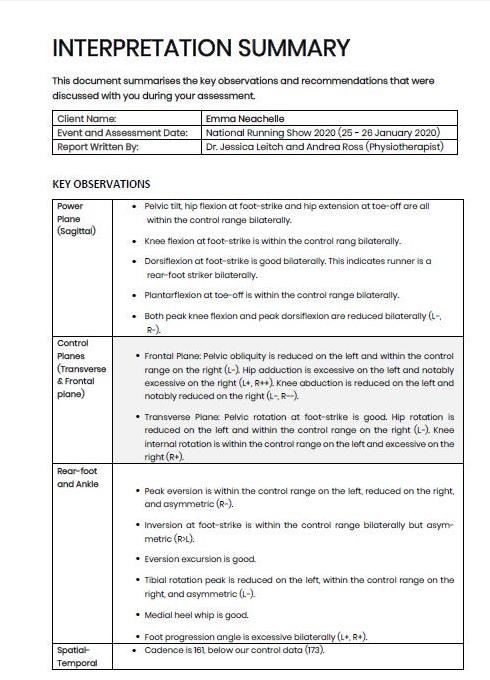
Please do click on each of the reports and have a read 🙂
The email suggested that I read through the reports and got in touch if I had any questions. The information in each report was so comprehensive I didn’t need to contact Run3D.
I did take note of this:
However, please do do the recommendations we advise as improvements in your running form won’t just happen on their own!
Although my recent niggles seem to indicate I need to continue to dedicate time to my rehabilitation work, I am starting to feel like the foam roller sessions and crab walks are having a positive benefit.
**Full disclosure: I paid for the Run3D gait analysis and treatment. I was not asked to review the gait analysis and treatment but decided to share my honest thoughts on something I personally found useful. As always, all opinions and dodgy photographs are my own**

Member adidas Blogger Community

Top 10 Running Blog 2020

Top 10 Running Blog 2019

Top 10 Running Blog 2018

Decathlon Bloggers Community

Myprotein Award Winner 2017

Member UK Fitness Bloggers

Proud to support #RunEqual

Very interesting. It sounds like something I could tell my brother-in-law to look out for to get done.
I’m a numbers and stats geek at heart so I found the reports really interesting. I’m getting better at the exercises and stretches but it’s a slow process.
Seems very interesting! Somewhat physical exercise should be there in one’s life.Mainly cycling gives you mental and physical stability. From my personal experiences as an enthusiastic cyclist on the Lookout for good-quality and stylish clothing that was also reasonably priced.
Hi I’ve just found this blog and am looking at having the analysis. Did you find identifying your areas of concern and addressing them with the recommendations made an improvement? Did it reduce injuries? I have over the years multiple injuries on my right leg and am hoping this might identify if there is an underlying problem and how I can correct it
Hi Christina, Although I found having the Run3D gait analysis quite useful, I didn’t start to resolve my ongoing injury issues until I saw an Osteopath. The Osteopath really got to the bottom of what was causing my injury issues and gave me a set of exercises to do that made a huge difference. I have monthly appointments with my Osteopath, these help me to keep on top of any niggles that may appear.